
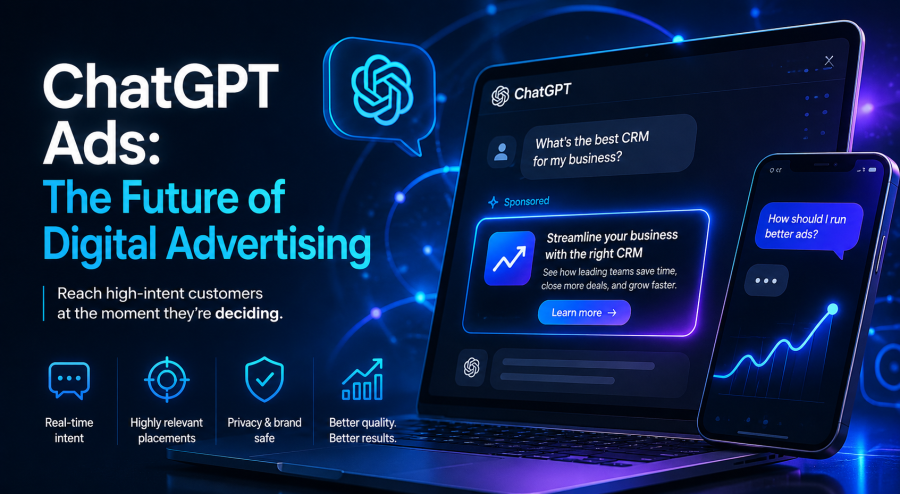
ChatGPT ads are quickly emerging as one of the most talked about developments in digital marketing. As AI platforms reshape how users search for information, businesses are now exploring how to advertise directly within conversational environments.
Unlike traditional platforms such as Google or Meta, ChatGPT advertising is built around real-time user intent. Instead of targeting keywords or demographics alone, ads are shown based on what users are actively asking, researching, and trying to solve. This makes ChatGPT one of the most high-intent advertising channels available today.
How ChatGPT Ads Work
ChatGPT ads appear within or alongside conversations, offering relevant suggestions based on context. These placements are limited, highly targeted, and clearly labelled as sponsored content.
Rather than overwhelming users, the platform prioritises:
- High relevance
- Low ad frequency
- Strong user experience
This means brands have fewer opportunities to appear—but when they do, the impact is significantly higher.
Why ChatGPT Advertising Is Different
The key difference lies in user behaviour. On Google, users search. On social media, users scroll. On ChatGPT, users are actively making decisions.
For example, someone asking “What’s the best CRM for a small business?” is far closer to converting than someone casually browsing online. This creates a powerful opportunity for brands to position themselves at the exact moment of consideration.
Best Practices for Running Ads on ChatGPT
To succeed with ChatGPT ads, businesses need to rethink their approach:
- Focus on education and value, not hard selling
- Align messaging with user problems and solutions
- Build trust through authority and clarity
- Avoid overly promotional or aggressive copy
The most effective ads will feel like a natural extension of the conversation.
The Opportunity for Early Adopters
ChatGPT advertising is still in its early stages, meaning competition remains relatively low. Brands that invest now can gain a significant advantage by learning how to operate within this new ecosystem before it becomes saturated.
As AI continues to influence search behaviour, conversational advertising is set to become a core part of digital strategy. Businesses that adapt early will be best positioned to capture high-intent audiences and drive meaningful results.
ChatGPT ads represent a shift from interruption-based marketing to intent driven engagement. For businesses looking to stay ahead, understanding how to advertise within AI platforms is no longer optional, it’s essential.
If you’re looking to future proof your marketing strategy, now is the time to start exploring ChatGPT advertising.
